
Beyond the Mask
Autistic identity, masking and the question: who am I now?

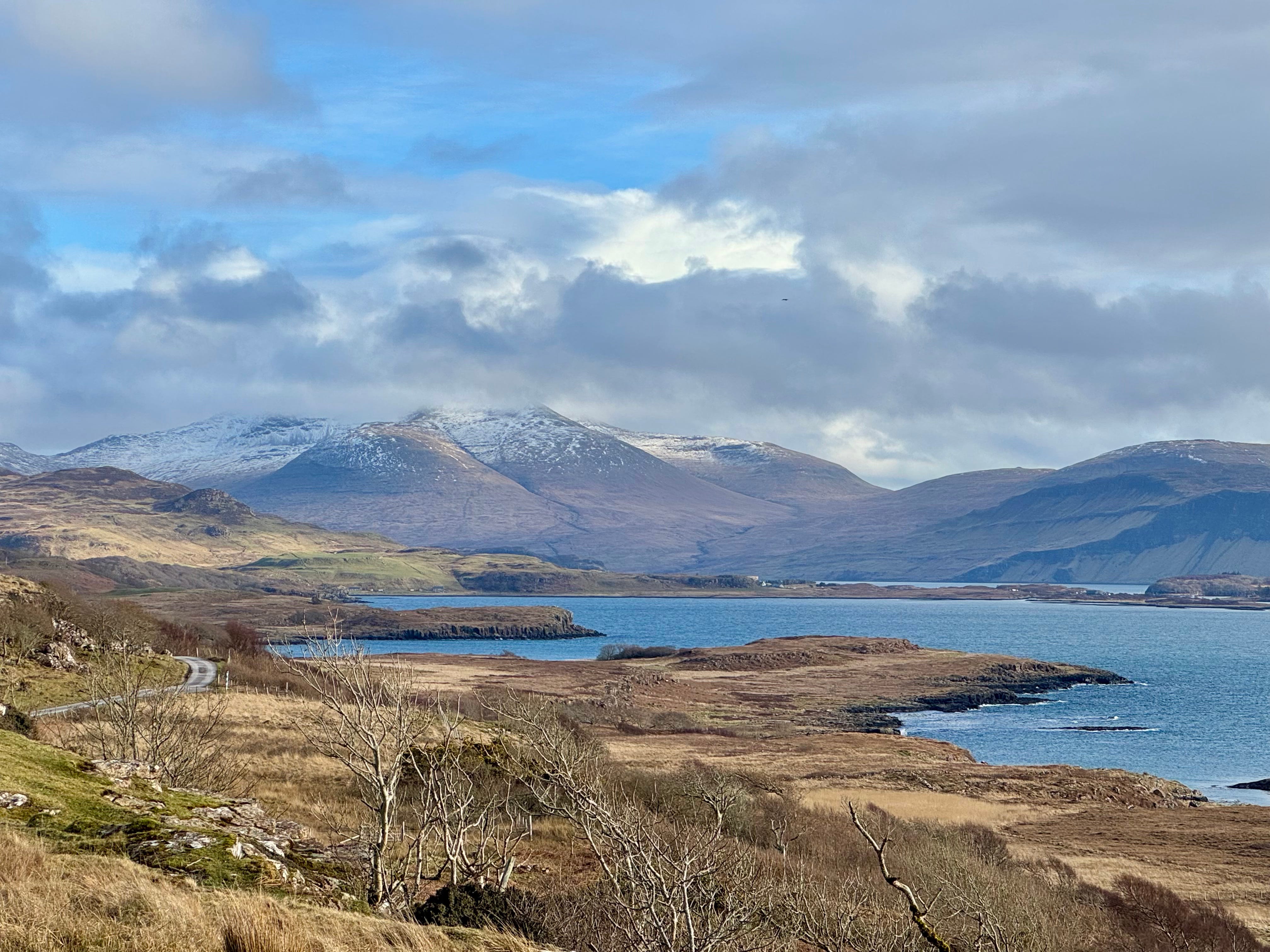
Immersed in this panoramic location on the Isle of Mull, I am mesmerised by the constancy of change.
Mountains are thrown into sharp relief, then commingle with fog. Luminescent horizon lines define the edges of the sea and the distant Treshnish Isles, then blur.
A distant eagle hovers over the tiny island of Ulva, leaving me breathless with anticipation and wonder.
My body recognises these rhythms of change — perhaps because something in me recognises the pattern.
Nature reveals truths I cannot deny.
Everything is changing.
Ten years ago, I lived in a red brick housing estate in an overpopulated and sought after Midlands village. I was grateful for that time and the security of a part-ownership housing scheme. It enabled me to support my teenage son and myself, working from home.
I had no knowledge then of my neurodivergent wiring, although a diagnosis of ME was in keeping with the frequent crashes and burnouts I experienced that meant weekends were often spent recovering on the sofa.
I was pushing through, because I had to.
Living in a small red brick semi, and often working well into the evening, I enjoyed getting out with the dog to the village park each day, or into the fields.
My life, like so many of us, was a perpetual to do list, with rigid week-day routines, although because of my health, time off was often spent in collapse.
Impermanence felt less tangible on a housing estate, where buildings and parked cars give the impression of solidity, and with routines and responsibilities creating an illusion of permanence.
But impermanence was my fascination. Why? Because it allowed me to plumb the depths of reality, and also, identity.
Mine, and everyone else’s.
I was training in the ‘emptiness’ teachings within a Tibetan Buddhist tradition, challenging my beliefs around stasis and security.
Emptiness is not something I can teach here, but it extends from impermanence. Despite the name, there is nothing nihilistic about it. It points to the interconnectedness of all things — the absence of fixed, inherent existence.
In other words, everything is changing. And things can only change because they are impermanent and interconnected, not fixed and discrete.
My earlier experience of living and travelling abroad over several years, and living as an outsider, was a great teaching on emptiness, because it was in these scenarios where I learned that people and place interacted with my presence in ways that showed me I could generally trust that what I put out, I would get back.
I made a living on and off as a travelling poet, offering my poems to passers’ by. They could take a print away with them, or have me read it, for a donation. This worked particularly well in the States because of my English accent.
I would stand on university campuses, on boardwalks or at popular tourist sites and generate income to pay for a room for the night, or food.
One afternoon, I stood on a boardwalk in San Diego in the heat of the sun. It was a prime location for tourists and locals alike. An artist — as it turned out — stopped and chatted. I gave him a reading and a poem to take away. A few dollars was a usual donation. I unwrapped what I thought were two dollar bill notes, only to find a hundred dollar bill inside.
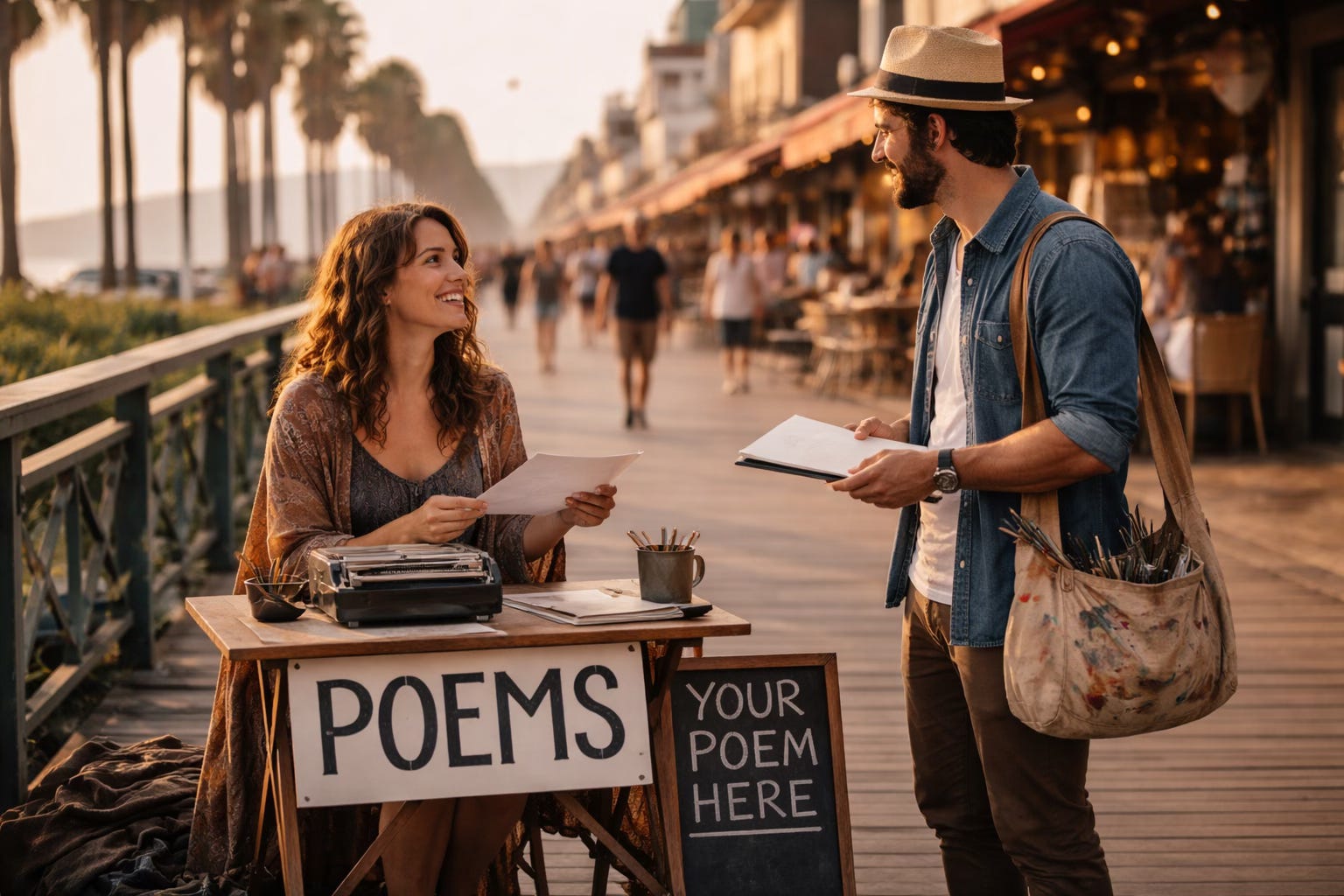
I knew directly in that moment how I depended on the kindness of others for my existence. How we are all interwoven — a fabric of humanity.
I do not wish to glamourise this existence — there were many trials and tribulations, and I will write more about my life on the road soon, but there were certainly upsides.
One of these was directly encountering something I hadn’t yet named: the malleability of my identity.
What I didn’t yet understand was how deeply this would shape the way I moved through the world — and how much of it was rooted in something I wouldn’t recognise for years.
This is where the story begins to deepen.
