
Mindfulness on the Spectrum (Part 1): When Practice Becomes Override
A neurodivergent mindfulness teacher on awareness, masking, and the hidden cost of calm

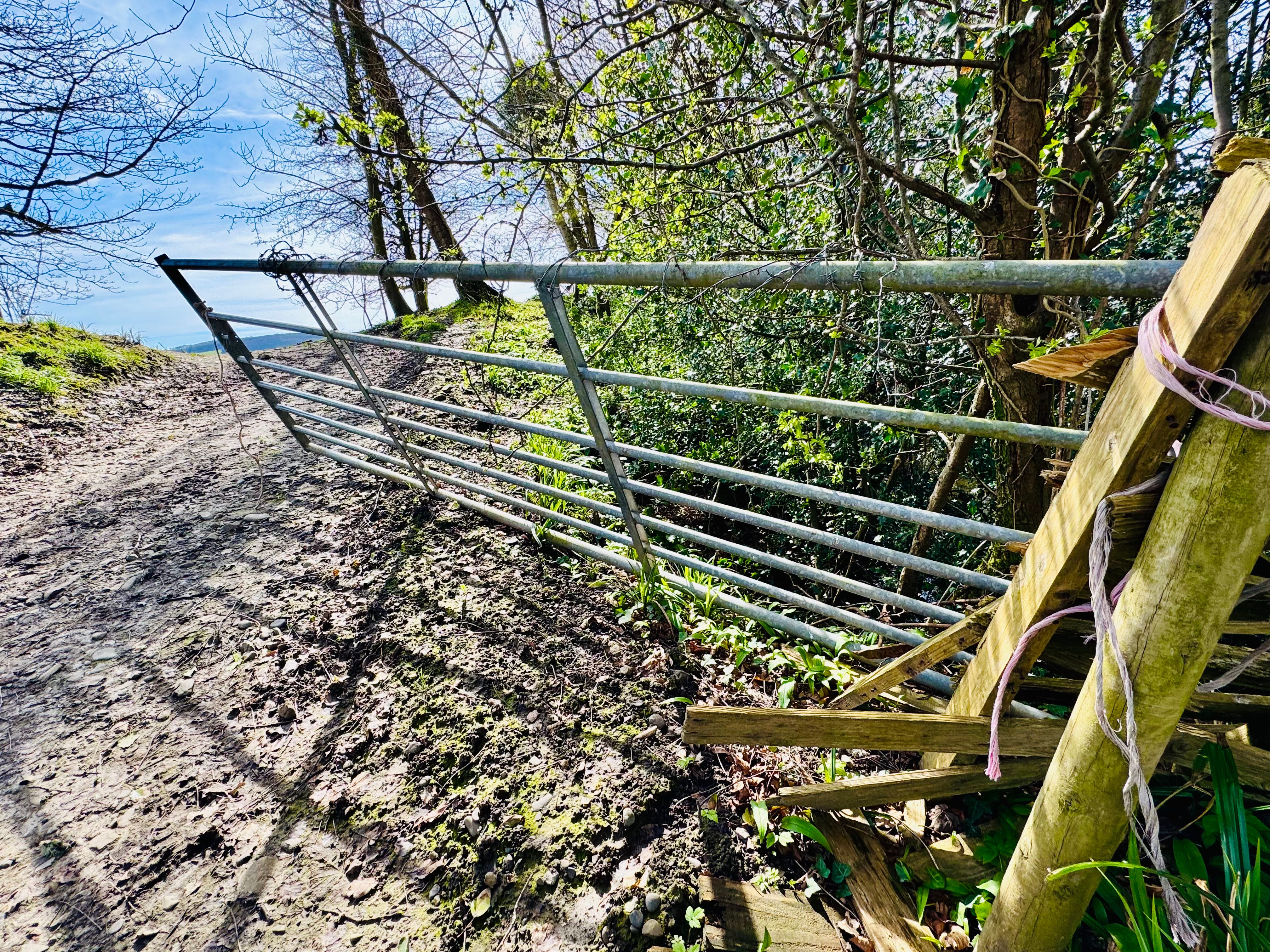
Today is a better day. A day when the world opens up a little.
The sun is shining, which, in the UK, means an urgent rush to mow the lawns (not my favourite background noise), and the lambs are frolicking in the neighbouring fields. I have a little more capacity, too. Spring has finally sprung.
I am currently in what I call a health flux.
I have ME/CFS, and I am autistic. Recently, my capacity has plummeted. Medication changes and various other factors have impacted me enough that my usual morning routines, including meditation practice, have fallen away.
It’s not through lack of discipline, but through the need to slow down and to rest more.
I am drawing more deeply on the self-compassion practices I’ve spent years learning, and teaching.
And I’m more mindful now of “fit”. I know that my nervous system can’t always meet the mindfulness practices in which I am trained, and this is an ongoing conundrum.
The gate to mindfulness and meditation remains partially open; I can’t always access it in the way I have been taught.
This raises questions for me around what I actually need that will nourish me, rather than detract from my sensitivities and fluctuating health.
Perhaps some of this will speak to you, too.
I trained as a mindfulness teacher over two years with Jack Kornfield and Tara Brach, among others. I deeply respect their teachings.
I’ve spent over thirty years immersed in Buddhist practices, from Vipassana through to Vajrayana, and I continue to work with a mentor who brings both depth of practice and psychotherapeutic insight.
And yet—
none of that fully accounts for the difficulties I’ve experienced with mindfulness and meditation over the years.
Difficulties shaped not only by illness, but by neurological difference I didn’t yet understand. For a long time, I had no lens for what was happening.
I had survival strategies—many of them adaptive, even praised—but they were running in the background, unbeknownst to me. A constant adjusting to please others and belong. This entailed overriding my own signals and needs in order to stay in relationship with the world around me.
It required pushing through.
Meditation and mindfulness practices, at times, slipped into that same pattern—not as a genuine refuge, but as a subtle refinement of override.
There is a term for something adjacent to this: spiritual bypassing. A kind of moving away from difficult experiences and emotions through a veneer of calm or self-containment. I recognise aspects of that in my own history, but what I was experiencing wasn’t quite the same.
It was more nuanced.
More like compliance.
A learned capacity to follow instructions, even when something beneath the surface was whispering “no”.
There is another layer to this that I have come to recognise over time.
Much of my life has involved a high degree of self-monitoring. Tracking. Adjusting. Anticipating. Learning—often unconsciously—what needed to be softened or held back in order to fit into society and meet neurotypical norms.
This is the kind of high-masking that can lead to burnout. Because while it is a necessary survival strategy in the service of belonging, it often comes at the cost of self-abandonment.
So when I was invited, in mindfulness practice, to “observe” or “witness” experience, something subtle happened.
Those same internal systems came online.
Attention turned inward—but not as neutral awareness.
As self-monitoring.
Am I doing this right?
Is this what’s expected of me?
Does this allow me to safely belong?
These thoughts weren’t conscious. They were operating at the automatic level of my nervous system. But the pattern was there.
From the outside, this looked like calm. I had the posture, the closed eyes, the slight smile.
And there was benefit. It wasn’t black and white. This was a nuanced experience—a kind of hit-and-miss affair that mirrored much of my adult life.
For many mindfulness approaches, this distinction is rarely considered. For many neurotypical nervous systems, this level of self-monitoring is not required in the same way.
But for me, understanding self-monitoring has become central to understanding why practice sometimes soothes—and sometimes tightens.
And there is another layer still.
On the surface, practice can look like regulation. A steady attention. A non-reactive presence.
But over time, I began to notice something happening underneath that apparent calm.
A form of subtle self-containment.
If self-monitoring is the mechanism, then self-containment is the outcome.
Structured. Effortful. Shaped by long-practised patterns of surface-level regulation through control.
This was not suppression in the obvious sense—but something harder to detect. A holding down. A managing. A quiet internal decision not to express certain emotional responses because there is no clear place for them to go.
In particular: anger and frustration.
In traditional Buddhist sutra teachings, these are often framed as “poisons” to be abandoned.
For me, that translated into:
Not expressed.
Not processed.
Not fully released.
In modern mindfulness, compassion practices such as RAIN (Recognise, Allow, Investigate, Nurture) offer a more relational way of being with emotional experience.
Sometimes this helped.
Sometimes I couldn’t access what I was feeling at all.
In Vajrayana practises, emotions (such as anger) or states (such as desire) can be transformed through visualisation practices.
For me, that meant contorting my executive functioning to try to “see” internally—when I unknowingly had Aphantasia. Long, complex practices with multiple transitions became mentally exhausting, often leaving me depleted.
Trying to metabolise emotions within a braced nervous system is not always straightforward.
I will explore Alexithymia and rejection sensitivity more fully later in this series, but suffice to say, my emotional processing does not follow a steady or predictable rhythm.
Sometimes it is like waiting for a bus—nothing for hours, and then everything arriving at once.
Sometimes emotions feel inaccessible.
Sometimes they arrive in overwhelming waves.
Layered onto an already sensitive or overextended nervous system, this creates an internal load that is difficult to recognise in the moment.
Because externally, nothing looks “wrong”.
But internally, something is being carried.
There is a further layer.
My resting brain does not seem to settle in the way it appears neurotypical brains do. Research suggests increased baseline activity in autistic brains, and my lived experience reflects that. At times, the longer I sit, the more active things become. It’s often a hyper-active resting brain.
So what looks like calm on the surface may, in part, be a subtle flattening response—a way of managing ongoing internal activity.
Not organic.
But architected.
Not natural.
But engineered.
And over time, the body begins to speak.
Not dramatically at first, but through somatic signals: fatigue, tightness, shutdown, pain, or depletion that doesn’t match what appears to be happening externally.
It took me a while to recognise this pattern in myself.
Because what I thought was staying regulated, was, at times, tipping into holding too much without realising I was holding it.
And that distinction matters.
There is a particular grief in this, too.
When practices that once supported you become harder to access. When familiar pathways no longer land. When something that has been a lifelong anchor begins to feel out of reach.
That grief is real.
And it is something I am beginning to work with, as practices that once formed part of my identity—as a meditator and mindfulness teacher—become inconsistent or fall away.
What feels more sustainable right now is different.
Walking.
Gentle crafting.
More rest.
A great deal of self-compassion.
And guided Yoga Nidra practices.
When I encounter neurotypical meditation spaces, I feel the rub.
I have a wonderful peer group with whom I trained, and they still meet monthly. I have had to pause my attendance. Long Zoom calls are tiring. I am translating myself into a space that doesn’t quite fit. I may not have capacity to meditate on the day.
That is a loss.
Recently, I noticed something in a meditation app I use.
It asks me each day whether I have “completed my practice” the day before. It tracks streaks. It encourages consistency, as if continuity is the measure of depth.
And I found myself pausing.
Because my practice does not look like that.
Sometimes I practice daily. Sometimes I don’t. Sometimes I return after weeks away—not because I have failed, but because my capacity has shifted.
And yet here was a system implying that absence is a break in commitment.
It felt, unexpectedly, like a familiar pattern.
A subtle move from support into monitoring.
From invitation into measurement.
From practice as refuge into practice as performance.
Another place where awareness risks becoming tracking.
Another place where the nervous system is asked to override itself in order to stay “consistent”.
And it left me wondering—not just about the app—but about how easily these assumptions travel.
Into practice.
Into teaching.
Into the idea of what it means to be “doing mindfulness properly”.
I’ve often felt like my seeming outer calm is more a case of emotional suppression and avoiding difficult conversations 😬 I totally relate to so called “healthy habits” becoming yet another domain to monitor, track and ultimately beat myself up for not doing them well enough and I’ve never thought about the meditation streaks but it does low key upset me because I never keep one going when that shouldn’t be the goal anyway!
The goal isn’t just to use all the tools consistently but to be able to identify which tool is needed and use it appropriately for my benefit and not to torture myself 😆
This is some of the most precise writing I've encountered on the limits of contemplative practice, and it earns that precision because it comes from the inside. ❤️ The 'witnessing' instruction assumes a neutral observer that the neurodivergent nervous system simply may not have access to in the same way. When the observer is also the system that learned to monitor for safety, observation and override collapse into each other. That's not a failure of practice. That's a structural problem with how the instruction was designed, for whom, and with what nervous system as the implicit baseline.